The Hidden World Clocking In at Midnight: Inside America's Underground Night Shift Social Scene
The fluorescent lights in the hospital cafeteria on the third floor of a major medical center in Houston never fully dim. At 2:30 AM, the place fills up — not with patients or visitors, but with a rotating cast of nurses, security guards, environmental services staff, and the occasional exhausted resident who's been awake so long they've looped back around to something resembling cheerful. They know each other's orders. They know each other's kids' names. They know who's going through a divorce and who just got a promotion.
This is not the America you see on TV. This is the America that keeps everything running while the rest of us sleep — and it has built a social world so genuine, so specific, so alive, that it makes most daytime networking events look like sad pantomimes of human connection.
A Society Within a Society
Approximately 15 million Americans work the night shift, according to the Bureau of Labor Statistics. That's a city the size of New York and Los Angeles combined, awake and active when the rest of the country is horizontal. And over time, these workers have done what humans always do when they share space and circumstance: they've built culture.
It's not organized. There's no app for it, no hashtag, no influencer documenting it for content. It grows organically in the in-between spaces — the break rooms, the parking lots, the 24-hour spots that exist specifically because someone on a night shift needed a place to land.
Those spaces, and the communities inside them, are some of the most authentic social ecosystems in America right now.
The Diner as Community Center
In cities across the country, certain all-night diners function as unofficial clubhouses for the overnight workforce. In Detroit, a Denny's near the medical district has been the de facto gathering spot for hospital and factory workers on the third shift for over a decade. Regulars have standing orders, preferred booths, and a relationship with the overnight staff that goes well beyond transactional.
"We know everybody," says Marcus, a security guard who's been doing the overnight shift at a nearby hospital for seven years. "Same faces every night. You get to know people's whole lives. Somebody's kid graduates, we're all celebrating at 4 AM over pancakes. Somebody's going through it, we know. There's a realness to it that I don't think I'd find anywhere else."
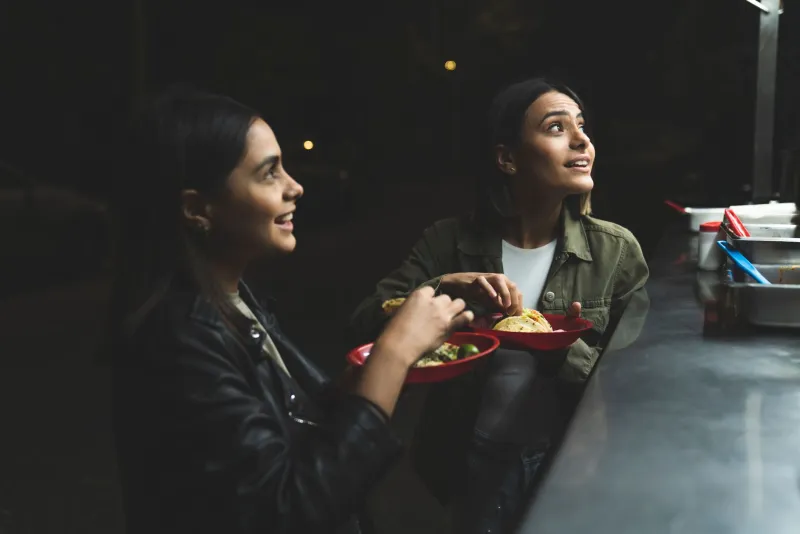
In New Orleans, the 24-hour spots near the French Quarter serve a similar function for hotel workers, kitchen staff, and the logistics crews that keep the city's famous hospitality industry moving. In Los Angeles, certain all-night taco trucks near the produce market in downtown have become gathering points for warehouse workers and drivers who start their shifts before dawn.
These aren't tourist destinations. You find them by working the night shift, or by knowing someone who does.
The Laundromat at 3 AM: Weirder Than You Think, Better Than You'd Expect
Some of the most unexpected social scenes in the overnight world happen in 24-hour laundromats. On the surface, a laundromat at 3 AM sounds bleak. In practice, it's often the opposite.
The people who show up at that hour tend to be night shift workers on their way home, people with unconventional schedules, and — particularly in dense urban areas — a cross-section of the city that would never normally occupy the same room. Without the daytime crowd, without the pressure to be anywhere, conversations happen. Real ones.
In Chicago's Pilsen neighborhood, a longtime overnight laundromat regular named Diana describes the 3 AM crowd as "the most honest people I've ever met. Nobody's performing. You're tired, your guard is down, and you're just... there. You talk. You find out people have whole lives that are completely invisible to the rest of the city."
Transit Hubs and the Brotherhood of the Pre-Dawn Commute
Anyone who's waited for the first train of the morning in a major American city knows the peculiar intimacy of that hour. In New York, the first few A trains out of Far Rockaway carry a crowd that's almost entirely night shift workers heading home — nurses, restaurant workers, cleaners, security staff. They recognize each other. They hold doors. They share earbuds and snacks and unspoken solidarity.
In Chicago, the overnight bus routes have their own regulars, their own informal hierarchies, their own running jokes. Transit workers who staff these routes often develop genuine relationships with repeat overnight riders over months and years.
"The overnight bus is its own little world," says Terrance, a Chicago Transit Authority driver who's worked the overnight route for four years. "You see the same people. You look out for each other. I've got riders who check on me if I'm running late. That doesn't happen at noon."
How to Find These Worlds (If You're Not Already In Them)
If you're a night owl looking to access these spaces, a few honest tips:
Respect the culture. These communities exist because they're low-key. Don't show up with a camera and a content strategy. Show up as a person.
Go to the same place multiple times. Regulars become regulars by being regular. The third or fourth visit is when things start to open up.
The best spots are rarely advertised. Ask someone who works nights where they go. That's your fastest route in.
Hospital and university cafeterias that are open overnight are some of the most welcoming public spaces in any city. If you're in one, you're already welcome.
What Daytime America Is Missing
There's a version of American social life that doesn't care about your follower count or your job title or what neighborhood you live in. It cares whether you show up, whether you're real, and whether you're willing to be present in the in-between hours when nobody's watching.
That version exists. It's clocking in right now, somewhere near you, under fluorescent lights, over bad coffee, in a booth that's been worn smooth by years of people who actually needed each other.
You just have to stay up late enough to find it.