Stop Apologizing for Staying Up Late: The Night Owl's Case for Owning Your Hours Without Shame
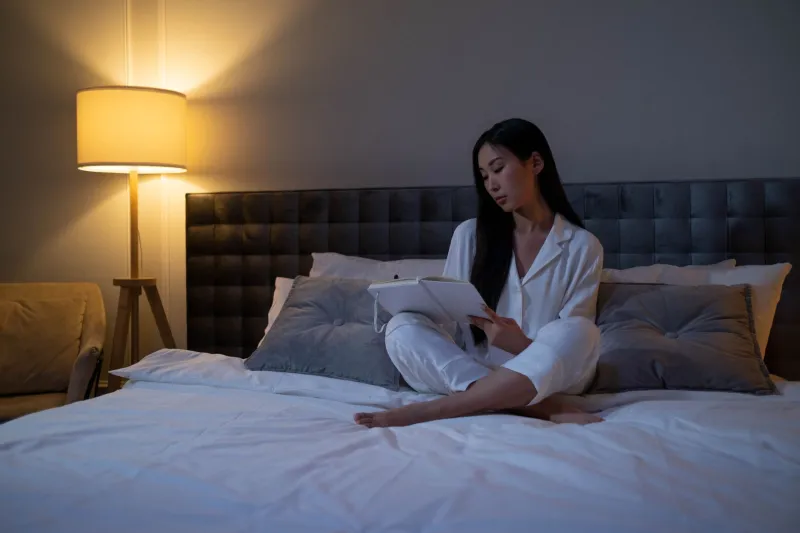
Let's get something out of the way: you are not broken.
You are not lazy. You are not undisciplined. You are not "ruining your health" by being most alive at 11 PM, or by finding the quiet hours after midnight to be the only time the day actually makes sense. You are not behind, despite what every productivity podcast, wellness influencer, and 5 AM club evangelist has been quietly implying for the last decade.
You are a night owl. And somewhere along the way, American culture decided that made you the problem.
It didn't always feel this oppressive. But something about the current moment — the relentless optimization of every waking hour, the cult of the early riser, the constant algorithmic reminder that successful people are up before the sun — has turned a simple biological preference into something that carries actual shame. And that shame is worth examining, because it's doing real damage.
The Myth That Morning People Built the World
Here's a story American productivity culture loves to tell: the early bird gets the worm. The 5 AM alarm is the price of ambition. Sleep is a luxury, and those who need a lot of it — or need it at the wrong hours — are simply not trying hard enough.
This narrative has been remarkably durable, and remarkably effective at making night owls feel like they're perpetually running late on their own lives.
But the science doesn't support it. Chronobiology — the study of biological time — has established pretty clearly that sleep timing preferences are largely genetic. Your circadian rhythm is not a personal choice. It is not a habit you formed in college and never broke. It is, for many people, a deeply wired biological reality that no amount of alarm-setting willpower is going to fundamentally rewire.
Research from institutions including the University of California and the UK Biobank study has consistently found that night owls perform just as well as morning types on measures of cognitive function — when tested at their optimal time of day. The problem isn't the night owl. It's a world that insists everyone operate on the same schedule.
Revenge Bedtime Procrastination: A Symptom, Not a Sin
If you've spent any time in online wellness spaces, you've probably encountered the phrase "revenge bedtime procrastination" — the phenomenon of staying up late as a form of reclaiming personal time after a day that felt completely controlled by external demands. It's real, it's widespread, and it's been treated largely as a bad habit to be corrected.
But here's a different read: what if it's a completely rational response to an irrational situation?
When your entire waking day is structured around other people's needs — your job, your kids, your commute, your inbox — the hours after 10 PM may genuinely be the only time that belongs to you. Staying up isn't avoidance. It's reclamation. It's the self insisting on existing outside the context of its obligations.
Shaming people out of that impulse doesn't fix the underlying problem. It just removes one of the few pressure valves they have.
The Wellness Industrial Complex Has a Morning Bias
Scroll through any wellness account on Instagram or TikTok and count how many times "early morning" is coded as virtuous. The sunrise workout. The 6 AM journaling ritual. The "I wake up before the world does" energy that's been sold to us as the hallmark of someone who has their life together.
This isn't neutral. It's a cultural value judgment dressed up as health advice, and it has a real cost for the roughly 30 percent of the population that leans chronobiologically toward evening.
Night owls who try to force themselves into morning-person routines often end up sleep-deprived, not transformed. Chronic sleep deprivation — which is what you get when a night owl is forced to wake at 6 AM day after day — is associated with increased anxiety, impaired decision-making, weakened immune function, and a whole list of other outcomes that the wellness industry claims to be fighting against.
In other words: forcing yourself to be a morning person, in the name of health, might actually be making you less healthy.
What Reclaiming Your Night Actually Looks Like
Rejecting the guilt around being a night owl doesn't mean abandoning all structure. It means building structure that works for your biology instead of against it.
For some people, that looks like negotiating flexible start times at work, or pursuing careers that accommodate nontraditional hours. For others, it's simply stopping the performance of apologizing — the reflexive "I know, I know, I need to fix my sleep schedule" whenever the subject comes up.
It also means taking your nighttime hours seriously — not as stolen time, not as guilty indulgence, but as legitimate, valuable hours that deserve to be used intentionally. Whether that means creative work, meaningful conversation, exercise, or simply the rare luxury of existing without an agenda, those hours are yours. Own them.
The Radical Act of Not Explaining Yourself
There's a particular exhaustion that comes from constantly justifying your natural rhythms to a world that wasn't designed for them. The explanations, the apologies, the promises to "work on it" — all of it adds up to a low-grade self-rejection that compounds over time.
The shift that's happening right now among night owls — and you can feel it in the culture, in the pushback against hustle-culture burnout, in the growing conversation around chronotype diversity — is a move away from that exhausting self-justification.
You don't owe anyone an apology for being awake at midnight. You don't need to fix what isn't broken. You need a world that's a little more honest about the fact that human beings don't all run on the same clock.
Until that world fully arrives, the most useful thing you can do is stop treating your natural rhythms as a problem to be solved — and start treating them as something worth protecting.
The night is yours. You earned it just by staying up for it.