Raised by the Night: How After-Dark Culture Became the New American Memory

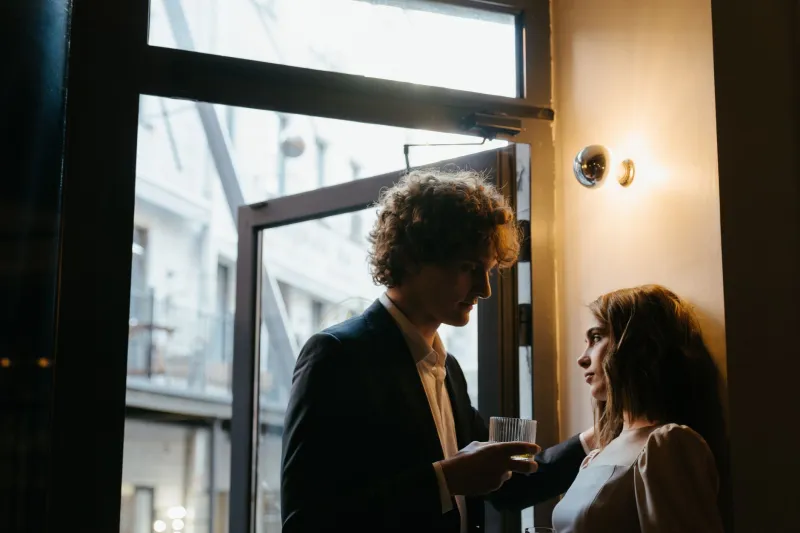
Photo by Photo by The Ridge Ohio on Unsplash on Unsplash
Ask someone from the Baby Boom generation where they were when they heard a piece of defining news, and the answer usually involves a living room, a television set, and a time of day when the whole family was awake. Ask someone from Gen Z the same question, and the answer is more likely to involve a phone screen, a set of earbuds, and a timestamp somewhere between midnight and 4 AM.
This isn't just a quirk of sleep schedules. It's a fundamental restructuring of how and when Americans build the memories that define them — and it's happening faster than most cultural observers have noticed.
The Hours We Used to Sleep Through
For most of the twentieth century, American culture operated on a schedule. Prime time television ended. Radio stations signed off. The newspaper came in the morning. The shared cultural experience was, almost by definition, a daytime or early-evening experience. The night was private, domestic, and largely uncurated.
That's over. Streaming platforms don't have schedules. Social media doesn't have a bedtime. And for a generation raised on always-on connectivity, the late-night hours have become prime time in a way that would have been unrecognizable to their grandparents.
The result is a generation — actually, multiple generations, but younger cohorts most acutely — whose most formative cultural touchstones are attached to hours that used to belong to sleep. The album they heard for the first time at 1 AM. The show they binged until sunrise. The live tweet thread that had them cackling in their dark bedroom at 3 AM while the rest of the house was quiet.
These are the moments that stick. And increasingly, they're nocturnal.
What Makes a Moment "Iconic" Now
Iconic used to mean something that happened in public, in daylight, in front of a large simultaneous audience. The Super Bowl halftime show. The finale of a network drama. The moment a major news event broke on live television. These were events that millions of people experienced at the same time, together, in a way that created shared cultural shorthand.
Late-night culture has complicated that model significantly. The moments that younger Americans describe as defining often have a more intimate, nocturnal quality to them. They're not about being in the same room as everyone else — they're about being awake when most people aren't, finding something that feels like it was made specifically for you, and sharing it through a screen with people who are equally, defiantly awake.
There's a reason so much of the language around cultural moments on social media has a late-night flavor. "This is a 3 AM album." "Found this at 2 AM and I haven't recovered." "Midnight drop." The night has become a marker of authenticity, of emotional weight, of the kind of experience that hits differently when your defenses are down and the world is quiet.
"I think about the music I listened to in high school, and almost all of my clearest memories of it are late-night memories," says Priya, a 26-year-old in Atlanta. "Not because I only listened at night, but because that's when it actually landed. That's when I was paying full attention."
Milestones at Midnight
It's not just passive consumption that's gone nocturnal. The way Americans mark milestones and celebrate life events has shifted too, and the night is increasingly central to it.
New Year's Eve has always been nocturnal, but consider how the ritual has evolved — the countdown is now as much a social media event as a physical one, with people narrating their midnight in real time for audiences who may be in different time zones entirely. Graduations are followed by parties that don't really start until midnight. Birthdays, for younger adults especially, are often celebrated in ways that treat the stroke of midnight as the main event rather than the beginning of the end.
There's also the phenomenon of the "soft launch" — the late-night social post that announces something significant (a relationship, a new project, a major life change) at an hour when the poster can claim plausible deniability about how intentional it was. The night gives people cover to be vulnerable in public in ways that feel too exposed in daylight.
"I announced my engagement at like 11:45 PM," admits Ryan, a 31-year-old in Denver, laughing. "Partly because that's just when we got home and I wanted to share it. But also, honestly, it felt less terrifying to put it out there when I knew most people were asleep. By morning it already had a life of its own and I didn't have to watch every reaction in real time."
The New Nostalgia
All of this is creating a form of nostalgia that looks different from what came before. Classic American nostalgia tends to be sunny — backyard barbecues, Saturday morning cartoons, afternoon baseball games. The cultural memory of mid-century America is bathed in daylight.
The nostalgia being built by younger Americans today has a very different texture. It's the glow of a phone screen in a dark room. It's the specific silence of a house at 2 AM when you're the only one awake. It's the feeling of being in on something — a show, an album, a conversation — that most people haven't found yet.
This isn't better or worse than the nostalgia that came before it. But it is distinct. And as the generation currently being raised on 24-hour streaming and always-on social media gets older, the cultural memory they carry with them is going to look fundamentally different from anything previous generations built.
Night Owl Traditions Are Going Mainstream
Perhaps the most striking aspect of this shift is how normalized it's becoming. What used to be the domain of insomniacs and night-shift workers and college students pulling all-nighters has become a mainstream mode of cultural participation.
Streaming platforms now build their release strategies around late-night drops. Artists drop albums at midnight. Major announcements are timed for the moment when night owls are most active online. The culture industry has figured out what the night owls always knew: the hours after midnight carry a particular kind of emotional charge that daylight simply doesn't replicate.
And the memories made in those hours? They tend to stick.
The night used to be something you slept through. For a growing slice of America, it's where life actually happens — and where the stories worth telling get written.