After Hours, On Your Terms: Building Your Exit Strategy One Late Night at a Time
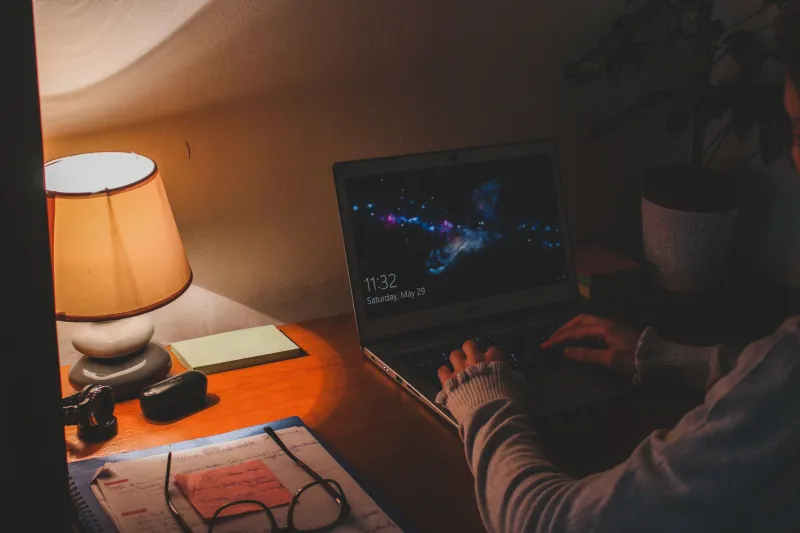
The dream doesn't always announce itself. Sometimes it just shows up quietly, sometime around 11 PM, when you've finished the day job obligations, the kids are asleep, and the apartment is finally yours for a few hours. You open a laptop, or a sketchbook, or a spreadsheet, and you start building something that belongs entirely to you.
This is happening on a scale most people don't talk about. Across the US, a significant and growing number of workers are using late-night hours not just to decompress but to construct genuine alternatives to the employment situations they're currently stuck in. It's not glamorous. It's often exhausting. But for a particular kind of night owl, it's working.
Why the Night Works for This
The psychological case for after-dark side-building is more solid than it might seem. During the day, your brain is in reactive mode — responding to emails, sitting in meetings, managing the social dynamics of a workplace. By the time you've cleared that mental queue and the house has gone quiet, something shifts. You're tired, yes. But you're also free from the constant context-switching that makes deep work impossible during daylight hours.
Researchers who study creative and entrepreneurial output have noted that many people report their most focused, autonomous work happening in late-night windows — not because they're more alert, but because there are fewer interruptions and, critically, fewer people with claims on their attention. The night, for all its reputation as unproductive, turns out to be a remarkably efficient time to work on things that actually require concentration.
For people trying to build a way out of a job they're done with, that focused window is everything.
The 11 PM Shift: Real Stories
Kendra works in healthcare administration in Phoenix. Her day job is stable and pays reasonably well. It's also, by her own description, slowly suffocating her. Three years ago, she started spending her late nights building a freelance UX consulting practice. She didn't quit her job. She didn't make any dramatic announcements. She just started working on client projects after 11 PM, most nights for two to three hours.
"I gave myself two years to make it real before I told anyone," she says. "By month eighteen, I was making more from the side work than from my day job. I gave notice four months later."
Her story isn't unique. It's actually a recognizable pattern among people who've successfully transitioned out of traditional employment: a long, quiet, nocturnal build period followed by a very undramatic exit.
Rodrigo, a graphic designer in Brooklyn, spent two years taking on freelance branding projects between 10 PM and 1 AM while working a full-time in-house design role. "My day job was paying the rent while my night work was building the portfolio and the client relationships I needed," he explains. "When I finally went independent, I already had a waiting list."
The Strategic Advantage of Working in the Dark
There's a competitive element to this that's worth naming. When you're building a side business or creative practice during hours when most people are watching Netflix, you're putting in time that your competition isn't. Not because you're more disciplined — but because your natural rhythms happen to align with the hours that are structurally available to you.
Night owls who've accepted that their peak energy doesn't arrive until mid-evening have a particular advantage here. They're not fighting their biology to get up early and grind before work. They're simply operating in the window that already feels natural to them.
The key, according to people who've done this successfully, is protecting that window fiercely. The late-night hours are easy to fritter away — social media, streaming, the general collapse that comes after a long day. The people who convert those hours into real outcomes tend to have a specific ritual or structure that signals to their brain: this time is different. This time is for the work that actually matters.
Practical Frameworks That Actually Work
A few patterns emerge consistently from people who've built meaningful side income or alternative careers through late-night hours:
The 90-minute rule. Rather than trying to work all night, many successful side-builders commit to a single 90-minute focused block starting around 10 or 11 PM. It's long enough to make real progress on something. It's short enough that it doesn't destroy the next day.
Separating creation from administration. Late-night hours tend to be better for creative and strategic work — writing, designing, building, planning. Administrative tasks (invoicing, emails, scheduling) can be batched into shorter daytime windows. Protecting the night for the high-value work makes a real difference.
The quiet launch. Multiple people interviewed for this piece described deliberately keeping their side projects off social media and away from their day-job colleagues until the project had real traction. The night's privacy, they said, was actually an asset — it let them fail, iterate, and improve without an audience.
Revenue before resignation. Almost universally, people who made successful transitions had replaced at least 60 to 70 percent of their day job income before they gave notice. The night-build period is about patience as much as productivity.
The Psychology of the Quiet Exit
There's something psychologically interesting about building your escape during the hours when your day job has no claim on you. It reframes the relationship to work you might otherwise resent. The job becomes a funding mechanism for something you're genuinely excited about. The resentment has somewhere to go.
"I stopped hating my day job the minute I started taking my side work seriously," Kendra says. "It became this weird partnership — my job was paying for the time and space I needed to build something better."
That reframe matters. The night owls who successfully build their way out tend to be the ones who stopped seeing the after-hours grind as sacrifice and started seeing it as investment. Not in some motivational poster way. In a very practical, spreadsheet-and-client-list way.
The night has always been where the interesting stuff happens. Turns out, for a lot of people, the most interesting thing happening after dark is the quiet construction of a completely different life.