Midnight Workshop: How to Turn the Dead Hours Into Your Most Productive Creative Time
At some point, you've probably been up past midnight working on something that matters to you — a story, a design project, a business idea you've been circling for months — and felt that particular combination of focus and freedom that only seems to exist when everyone else has gone to bed. Maybe you dismissed it as a fluke. Maybe you told yourself you'd get more done in the morning, then didn't.
Here's what's actually happening in those hours, and why the night owls who've learned to work with that energy instead of against it are quietly building some genuinely interesting things.
The Science of the Nocturnal Creative State
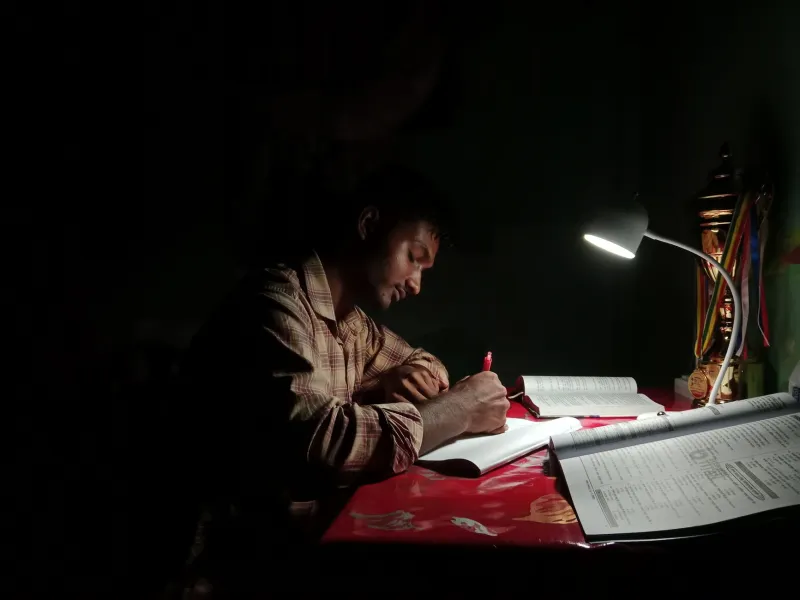
There's a reason the cliché of the artist working by lamplight at 2 AM persists across centuries of culture. It's not just romantic mythology — there's a functional explanation for why creative work often clicks into gear after midnight.
During late-night hours, the brain's default mode network — the system responsible for imagination, daydreaming, and making unexpected connections — tends to be more active relative to the executive control network that dominates focused daytime thinking. What that means in practical terms: your brain at midnight is less concerned with filtering and evaluating ideas, and more inclined to generate them freely.
This is also the time when external interruptions collapse to near zero. No Slack notifications. No one texting about plans. No ambient social obligation to respond to anything. The creative environment you'd spend serious money trying to engineer during the day just... happens naturally after midnight.
For people whose chronobiology leans nocturnal, this state isn't a side effect of being up too late. It's their actual peak. And learning to use it deliberately is one of the more underrated productivity moves available to night owls.
The Myth That's Holding You Back
Let's address the voice in the back of your head — the one that says late-night creative work is just procrastination with better lighting. That you're not really being productive, you're just avoiding sleep and calling it inspiration.
This is a cultural artifact, not a factual observation. The productivity gospel in America has been written almost entirely by and for morning people. The 5 AM routine, the early workout, the journaling before sunrise — these frameworks work genuinely well for a specific chronotype. They're also presented as universally correct in a way that quietly pathologizes everyone who functions differently.
The research on creative output doesn't actually support the idea that morning hours produce better work. It supports the idea that aligned hours — time spent working during your personal peak state — produce better work. For a significant chunk of the population, those hours fall late.
If you're genuinely getting things done between midnight and 3 AM, that's not avoidance. That's your window. Treat it that way.
Building a Midnight Workshop That Actually Works
Having the time and the mental state is a start. But late-night creative sessions can also drift into the pleasant-but-unproductive zone — the kind of night where you feel like you worked but can't quite point to what you made. Here's how to give those hours real structure without killing the energy that makes them special.
Define a single project anchor. The biggest late-night productivity killer is optionality. You sit down with four possible things you could work on and spend an hour choosing between them. Before you get started, decide what the night is for. One project. One direction. You can revisit everything else tomorrow.
Use the first 20 minutes as a warm-up, not a cold start. Don't open a blank document and expect momentum. Spend the first chunk of your session reviewing what you made last time, reading something adjacent to your project, or doing a low-stakes version of the work — sketching instead of designing, writing notes instead of drafting. Let the engine warm up naturally.
Protect the flow state aggressively. The late-night environment gives you a head start on focus, but it's still fragile. Phone in another room. Browser tabs closed to everything except what you need. The fewer micro-decisions your brain has to make during the session, the longer the real work sustains itself.
End with a breadcrumb. Before you stop for the night, write down exactly where you left off and what the next step is. Three sentences max. When you come back tomorrow night, you're not starting from scratch — you're picking up a thread. This single habit makes the difference between a creative practice that compounds and one that constantly resets.
The Night Owl Creator Economy
It's worth noting that the late-night creative window isn't just producing personal projects in isolation. A significant portion of the independent creator economy — the writers, illustrators, indie game developers, musicians, and small business builders who've built real audiences and real revenue — operates on nocturnal schedules.
The pattern shows up consistently: a day job that pays the bills, an evening that winds down, and then a two-to-four hour window after midnight where the actual creative work gets done. Over months and years, that window compounds into something substantial. A finished novel. A design portfolio. A newsletter with a real readership. A business that eventually replaces the day job.
This isn't the hustle-culture version of productivity, where every hour is optimized within an inch of its life. It's something quieter and more sustainable — a regular appointment with your own creative work, kept consistently because the conditions for it naturally exist in the hours you're already awake.
What You're Actually Building
The most important thing about a midnight creative practice isn't any individual session. It's the accumulation. The person who spends two focused hours on their project four nights a week is logging over 400 hours of creative work in a year — without restructuring their life, without waking up at 5 AM, without performing productivity for anyone.
That's a book. That's a body of artwork. That's a business that didn't exist twelve months ago.
The night isn't wasted time waiting for the morning to arrive. For a lot of people, it's the most honest and productive stretch of the whole day. The trick is deciding to use it — and then actually showing up for yourself when the world goes quiet.
Your midnight workshop is open. The only question is what you're building.