Wired and Inspired: The Weird Truth About Why Your Best Ideas Come When You're Running on Empty
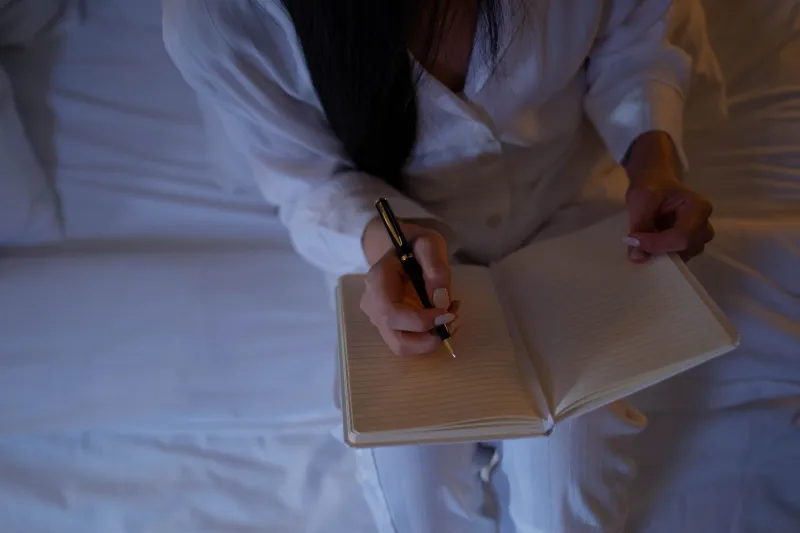
It's 1:47 AM. You've been staring at a half-finished project for three hours. Your eyes are dry, your coffee went cold an hour ago, and you're about two yawns away from face-planting on your keyboard. Then, out of nowhere, it hits you — the idea. The right idea. The one that makes you sit up straight and start typing like your fingers are on fire.
Sound familiar? You're not imagining it. And you're definitely not alone.
There's a strange paradox hiding inside those late, bleary-eyed hours: the same exhaustion that makes you terrible at answering emails or balancing a budget can actually make you better at certain kinds of creative thinking. Not in a hustle-culture, "sleep is for the weak" kind of way — that's a trap we'll get to — but in a genuinely fascinating, brain-science kind of way.
What's Actually Happening in Your Tired Brain
Here's the short version. Your prefrontal cortex — the part of your brain responsible for logic, filtering, and self-censorship — starts to lose its grip when you're tired. It's the bouncer at the door of your mind, and after midnight, it gets a little lazy on the job.
That sounds bad, but for creative work, it's kind of a gift. With the inner critic quieted down, your brain starts making looser, less conventional connections between ideas. Researchers call this "diffuse thinking" — as opposed to the focused, analytical thinking you need for tasks like coding or accounting. It's the same mental state that explains why people get their best shower thoughts, or why solutions to problems you've been wrestling with for days suddenly appear right before you fall asleep.
A study out of Albion College found that people who identified as "night owls" actually performed better on creative problem-solving tasks during their off-peak hours — meaning late at night, when they were naturally winding down. The reduced inhibition created by fatigue, it turns out, is a feature, not a bug — at least for a narrow window of the right kind of work.
The Myth That's Wrecking Creative People
Now, here's where we have to pump the brakes. Because somewhere along the way, this quirk of brain chemistry got hijacked by a very loud, very wrong narrative: that grinding through exhaustion is the path to greatness. That the most successful people sleep less, push harder, and treat rest like a weakness.
That's not creativity. That's chronic sleep deprivation, and it's genuinely dangerous.
Sustained sleep loss doesn't just make you tired — it degrades memory consolidation, tanks emotional regulation, and over time, increases the risk of serious health issues including cardiovascular problems and cognitive decline. The loose, free-associating brain that gives you a flash of inspiration at 1 AM is very different from the depleted, struggling brain that's been running on four hours of sleep for six nights straight.
The late-night creative spark is real. The idea that you should chase it by never sleeping? That's a myth worth killing.
How to Actually Use This Without Wrecking Yourself
So what does smart look like here? It's about working with these windows, not treating them as a lifestyle.
Identify your actual creative window. For most night owls, there's a specific stretch — often somewhere between 11 PM and 2 AM — where the mental looseness hits without the total fog that comes later. Pay attention to when your best late-night ideas actually tend to show up. That's your window. Protect it for the right kind of work.
Match the task to the state. Tired-brain creativity is great for brainstorming, free-writing, ideating, making unexpected connections between concepts, and breaking through creative blocks. It is not great for editing, detailed planning, financial decisions, or anything that requires precision. Use the late-night looseness for generative work, and save the critical thinking for when you're sharper.
Capture everything, judge nothing. When you're in that hazy, inhibition-lowered state, your inner editor is half asleep. Use that. Keep a notes app open, a voice memo running, a sketchbook nearby — whatever fits your creative process. Don't try to refine in the moment. Just get it out. The filtering can happen tomorrow morning with fresh eyes.
Build in a real stop time. This is the one most late-night creatives resist, but it matters more than almost anything else. Decide in advance what time you're shutting it down — not when you feel like stopping, because that moment never comes. Set an alarm if you have to. The best creative work happens in sustainable cycles, not death marches.
Protect your sleep debt. If you're going to lean into a late creative session, plan for it. Sleep in the next morning if your schedule allows. Take a nap. Don't stack late nights back to back without recovery. Treat your sleep like the resource it is, not something to be heroically sacrificed.
The Night Owl's Real Edge
Here's the thing nobody in the hustle conversation wants to say: the most sustainably creative people aren't the ones who sleep the least. They're the ones who understand their own rhythms well enough to use every part of the cycle.
The late-night hours can genuinely offer something that the structured, caffeinated, fully-awake 10 AM brain sometimes can't — a kind of mental wandering that leads to the unexpected. Writers, musicians, entrepreneurs, designers, and side-hustlers have been quietly exploiting this for decades. The difference between using it and abusing it comes down to intention.
Know what you're doing it for. Know when to stop. Know that the idea you captured at 1:30 AM will still be there in the morning — and it'll probably be even better once your rested brain gets a crack at refining it.
The late night isn't a shortcut. It's a different kind of tool. And like any tool, it works best when you actually know how to use it.