City That Never Sleeps, Workers Who Never Stop: Inside America's Night Shift Economy
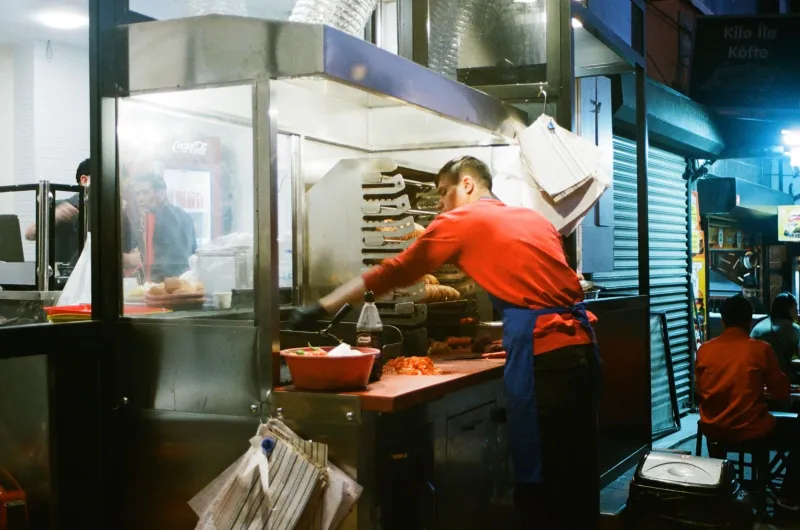
The diner on the edge of the industrial park opens at 10 PM and doesn't close until 8 in the morning. By 2 AM on a Tuesday, every booth is full. There are nurses still in scrubs from a shift at the hospital down the road, a table of warehouse workers from the distribution center a mile east, a couple of long-haul truckers who've been on the road since yesterday afternoon. The coffee is strong, the portions are enormous, and the waitstaff knows half the regulars by name.
This is the night shift economy. It's not glamorous. It doesn't get a lot of press. But it is, in its own way, one of the most fascinating and overlooked social ecosystems in America.
The Numbers Behind the Night
According to the Bureau of Labor Statistics, roughly 15 million Americans work evening or night shifts — that's about one in ten workers. Healthcare alone accounts for a massive chunk of that number. Add in transportation and logistics (which has exploded in the Amazon-and-DoorDash era), manufacturing, hospitality, emergency services, and the various support roles that keep 24-hour operations running, and you've got a workforce the size of a major country operating on a completely inverted schedule.
These are not fringe workers. They are, in many cases, the people keeping essential systems running while everyone else sleeps. And yet the infrastructure of daily American life — the restaurants, the banks, the gyms, the social spaces — is almost entirely designed around the other 85 percent.
The night shift economy has responded by building its own.
The Food Scene That Runs on Graveyard Hours
This is where it gets genuinely interesting from a food-and-drink perspective. The late-night food landscape in most American cities is, frankly, not great if you're looking for a real meal at 3 AM. Fast food and gas station snacks dominate. But in pockets near hospitals, near major distribution hubs, near airports and transit centers, something different has developed.
Diners built specifically for shift workers tend to operate on a different logic than normal restaurants. Menus are built for people who've been on their feet for eight hours and need actual fuel, not a light snack. Portions run large. Prices run reasonable. The hours are non-negotiable — if you say you're open at 2 AM, you're open at 2 AM, because your customers can't afford to show up and find a "closed early" sign.
In cities like Chicago, Houston, and Las Vegas — places with large shift-working populations — you can find clusters of these spots if you know where to look. They're rarely reviewed on major food platforms, which tend to operate on a daytime-biased algorithm. They live on word of mouth, on recommendations passed between coworkers at shift change, on the kind of local knowledge that doesn't make it onto a "best restaurants" listicle.
Some have become genuine institutions. The 24-hour Filipino diner near a major hospital in Los Angeles that's been feeding nurses and doctors for thirty years. The Tex-Mex spot in Houston that does its biggest business between midnight and 4 AM. The soul food counter in Atlanta that's been the unofficial commissary for the city's overnight workers for two generations. These places deserve more attention than they get.
The Services Built for the Night
Food is just the most visible part of it. The night shift economy has spawned a whole ecosystem of services that most daytime Americans don't know exist.
There are gyms that do genuine business between midnight and 5 AM — not just the big 24-hour chains, but smaller spots that have organically become community hubs for shift workers who can't make a 6 PM class. There are barbershops and nail salons in some cities that have shifted their hours to capture the post-shift market. There are financial services — check cashing, money transfers — that operate on night-friendly hours because their core customers can't make it to a bank during business hours.
There's also a thriving informal economy. Night shift workers talk to each other. They share information about which spots are open, which services are reliable, which neighborhoods are safe at 4 AM. This oral information network is essentially a parallel Yelp, one that operates entirely off-app and is arguably more trustworthy for the specific needs of night workers than any algorithm-driven platform.
Community in the Small Hours
Maybe the most underreported aspect of the night shift economy is the social infrastructure it generates. People who work unconventional hours often describe a specific kind of camaraderie that's hard to find in daytime professional environments. You're a small group, operating in a world that wasn't built for you, and that shared experience creates bonds.
The break room at a hospital at 3 AM is its own social world. The cluster of delivery drivers waiting outside a restaurant at midnight develops its own hierarchy, its own jokes, its own rituals. The overnight staff at a hotel lobby — often the same small group of people, night after night — builds a kind of found family that regular guests never see.
Some of this community has moved online, particularly since the pandemic. Reddit communities for night shift workers, Discord servers organized around specific industries, Facebook groups for nurses who need to vent at 4 AM — these spaces are thriving. They're places to share tips (which restaurants near the hospital are actually good, which gas stations have the best coffee), to process the particular stresses of working against the body's natural rhythms, and to simply feel less alone in a schedule that can be genuinely isolating.
Why This Matters Beyond the Night
The night shift economy deserves mainstream attention for a pretty simple reason: the people who work it are doing some of the most essential work in American society, and they're doing it with the least support.
The nurse who works 7 PM to 7 AM isn't just working harder hours — she's working in a world where the grocery store is closed when she gets off, where the pediatrician's office isn't open when she's available, where the assumption built into almost every service and institution is that she operates on a different clock. The delivery driver finishing his last run at 2 AM is navigating a city that has largely decided to stop serving him.
The businesses and communities that have stepped up to fill that gap — the diners, the gyms, the informal networks — are doing something genuinely important. They're building a parallel city, one that runs on different hours and different rhythms, and they're doing it mostly without acknowledgment.
Next time you're out after midnight, look around at the people who are there because they have to be. They're holding a lot together. The least we can do is notice.