No Sign, No Problem: How to Find America's Best Secret Late-Night Spots City by City
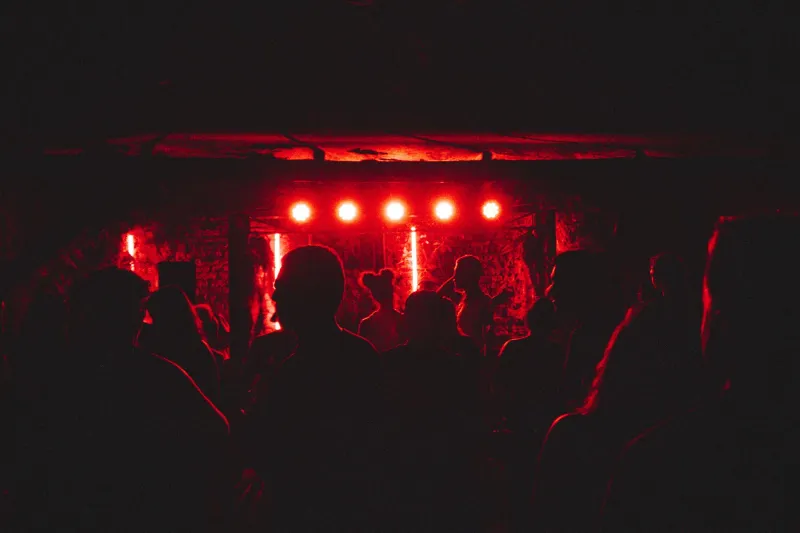
The best bar you'll ever walk into won't have a sign. The best show you'll ever see will be in a building that looks abandoned from the outside. The best late-night city experience you'll have in 2025 will not — under any circumstances — be something you found on a listicle.
That's the tip. That's always been the tip.
America's underground late-night culture is thriving, but it operates on its own terms. It doesn't need your foot traffic. It doesn't need your review. It needs you to know someone, or at least to know how to find someone who knows someone. This guide is your starting point.
New York City: The Basement Is Always the Answer
New York's late-night scene is so layered that tourists can spend a week there and never scratch the surface. The city has a well-documented speakeasy culture — Please Don't Tell (PDT) in the East Village, accessed through a phone booth inside a hot dog joint, is the famous example — but the real underground has moved further off the map.
Bushwick and Ridgewood in Queens are where warehouse parties and loft events have quietly replaced the club as the go-to late-night format. These aren't illegal raves — many are permitted events run by collectives with serious production values — but they don't advertise on mainstream platforms. They live on Instagram DMs, Telegram channels, and word of mouth from people who've been to the last one.
How to find them: Follow local DJ accounts and event collectives on Instagram. Look for accounts that post flyers without venue names — just intersections or "location TBA." The info drops 24-48 hours before the event. Showing up solo is fine; being dressed like you've never been to Brooklyn is not.
Dress code reality check: No one's checking labels. They're checking energy. Wear something that says you understand the room.
New Orleans: The City That Never Needed a Closing Time
New Orleans is the American city most honest about its relationship with the night. There is no last call on Bourbon Street, but Bourbon Street is also, frankly, not the move. The real late-night culture lives in the Bywater and Tremé neighborhoods, where the line between bar, music venue, house party, and second-line parade has always been blurry.
The Tremé in particular is home to a living brass band tradition that regularly turns into spontaneous late-night street performances. You won't find these on a schedule. You find them by being outside and following the sound.
For something more structured but still deeply local, look for unmarked bars on St. Claude Avenue. Several operate without signage or websites, serving as neighborhood anchors for musicians, artists, and the night-shift crowd that keeps the city running. The tell is usually a neon beer sign in a window and the sound of something good coming from inside.
The insider tip: Talk to bartenders on your first night. New Orleans bartenders are the most reliable intelligence network in the country. Tell them what you're looking for and they'll either send you somewhere or invite you themselves.
Detroit: The City That Invented This
If you want to understand American underground nightlife, you have to understand Detroit. Techno was born here, and with it, the template for the underground warehouse event that has since spread to every major US city. Detroit didn't just create a music genre — it created a culture of late-night spaces that exist outside mainstream commercial entertainment.
Movement, the annual electronic music festival held over Memorial Day weekend, is the public-facing version of this. But the real Detroit late-night scene runs year-round in spaces that don't make the tourism brochures. Venues like Tangent Gallery and the various rotating warehouse spaces in Eastern Market have hosted events that feel more like art installations than clubs — immersive, community-driven, and almost deliberately hard to find.
What makes Detroit different: The late-night culture here is genuinely tied to community identity. Events often have a social or artistic mission beyond entertainment. Showing up with curiosity and respect for that context matters more than what you're wearing.
Chicago: Rooftops, Basements, and Everything In Between
Chicago's late-night scene is one of the most underrated in the country, partly because the city doesn't market itself as aggressively as New York or Miami. That works in your favor.
The city has a thriving silent disco circuit — headphone-based events held in rooftop spaces, gallery lofts, and occasionally public parks — that has expanded significantly in the past few years. These events are more discoverable than a true underground (they typically require ticket purchases through smaller event platforms like Eventbrite or direct Instagram links), but they still fly under the radar of the mainstream nightlife press.
For something with more edge, the West Loop and Pilsen neighborhoods host rotating late-night art events and underground music showcases that are genuinely locals-only unless you know where to look. The Chicago Reader's event listings are more useful than most digital platforms for finding these.
Dress code reality check at 3 AM: Chicago winters mean the dress code is often "however you're surviving this cold plus whatever you put on top of it." In summer, the rooftop scene is genuinely stylish — think elevated casual rather than club-ready.
Los Angeles: The Secret Is That It's Not Where You Think
LA has a reputation as a nightlife city, but most of that reputation belongs to WeHo and the Sunset Strip — which, to be blunt, is the tourist version of the story. The actual late-night culture lives in East LA, Highland Park, and Boyle Heights, where underground shows, pop-up bars, and backyard events have been running on their own frequency for years.
LA also has a thriving late-night food and bar scene in Koreatown that runs genuinely late — some spots until 4 or 5 AM — and functions as an unofficial late-night social hub for the city's creative class. This is more accessible than a true underground event but still largely off the radar of people who aren't local.
For actual underground events, the LA scene runs heavily through private Telegram groups and curated email lists. Finding your way in requires making connections at smaller shows first.
How to Navigate Any City's Underground Scene
The playbook is mostly the same wherever you go:
Start with the local independent music press. Blogs, alt-weeklies, and local music Instagram accounts are consistently more useful than national platforms for finding real events.
Talk to service industry people. Bartenders, barbacks, and door staff at mid-level venues know everything. They're also usually more willing to share than you'd expect, especially if you're not being annoying about it.
Look for the flyer aesthetic. Underground events tend to use a specific visual language — risograph printing, minimal text, obscure references. If a flyer looks like it was made in five minutes on Canva, it's probably not the vibe you're looking for.
Respect the room when you get there. Underground spaces survive on trust and community goodwill. Don't blast the location on social media. Don't bring people who aren't going to get it. Leave the space better than you found it.
Which Cities Are Winning Right Now
If you're ranking the current state of late-night underground culture in America: Detroit and New Orleans are the lifers — they've always had it and they always will. Chicago and Brooklyn are having a genuine moment right now, with new collectives and spaces emerging faster than the mainstream press can track them. LA is sprawling and inconsistent but capable of genuinely transcendent nights.
The city that surprises people most? Atlanta. The underground music and art event scene there has exploded in the past three years, driven by a young creative class that isn't waiting for institutional validation. Keep an eye on the Westside neighborhoods.
Wherever you are, the best late-night experience in any American city is the one that doesn't need to advertise. Your job is just to find it.