Night Owl or Night Fool? What Brain Science Actually Says About Your Late-Night Productivity
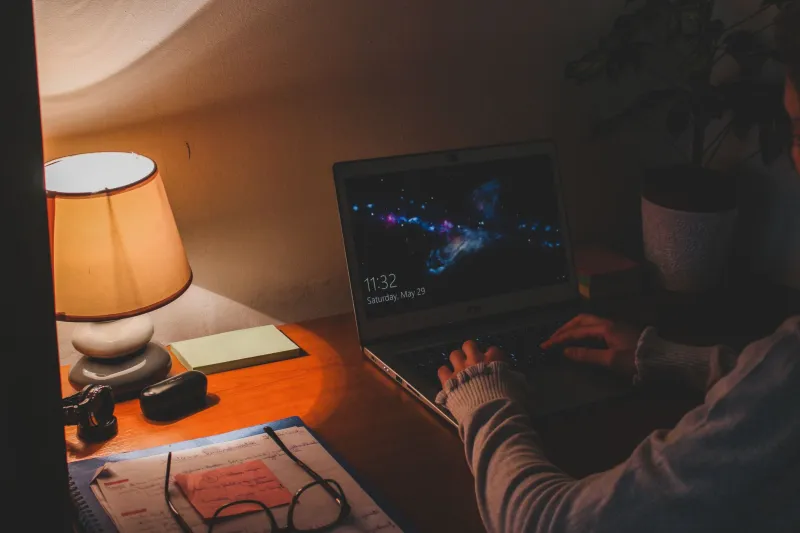
There's a story a lot of creative people tell themselves. It goes something like this: the world goes quiet, the pressure drops, and somewhere around midnight the ideas start arriving like they were waiting for everyone else to leave the room. Writers swear by it. Coders live by it. Entrepreneurs romanticize it. And honestly? It feels completely real in the moment.
But here's the question worth asking: is that late-night creative surge actually a neurological phenomenon — or is it mostly vibes?
The answer, as it turns out, is genuinely complicated. And understanding it could change how you structure your most important work.
The Circadian Reality Check
Let's start with the science that isn't up for debate. Every human being operates on a circadian rhythm — a roughly 24-hour internal clock that regulates everything from body temperature to hormone release to cognitive function. What most people don't realize is that this clock isn't standardized. Chronotype, the scientific term for your natural sleep-wake preference, varies significantly from person to person and is largely genetic.
Dr. Till Roenneberg, a chronobiologist at Ludwig Maximilian University of Munich whose research has influenced how scientists think about sleep timing, has documented that true "evening types" — people whose biological clocks are shifted several hours later than the social norm — make up a meaningful portion of the population. For these individuals, peak cognitive performance genuinely does occur later in the day. Not because of caffeine. Not because of habit. Because their biology is wired that way.
So when a genuine night owl says they think better at midnight than at 9 AM, they may be telling the exact truth. Their prefrontal cortex — the part of the brain responsible for complex reasoning, creative problem-solving, and focused attention — may simply be at its functional peak during hours that look unconventional on a calendar.
The Part That Is Romantic Folklore
Here's where it gets more complicated, and more honest. Not everyone who feels productive at 2 AM is a true evening chronotype. Some people are just sleep-deprived morning types who've convinced themselves the night is when they work best — because the night is when their responsibilities finally stop interrupting them.
There's a meaningful difference between "I'm neurologically sharper at this hour" and "I'm finally alone and distraction-free at this hour." Both can produce a sense of flow and creative output. But one is sustainable and one is quietly eroding your cognitive capacity over time.
Sleep researchers at the University of Pennsylvania have shown in controlled studies that people operating on chronic sleep restriction — even moderate amounts, like six hours a night — demonstrate measurable declines in cognitive performance while simultaneously underestimating how impaired they are. In other words, you feel fine. You feel sharp. You feel like the ideas are flowing. But your performance metrics tell a different story.
This is the part of the 3 AM productivity myth that deserves scrutiny. If you're staying up until 3 AM and waking up at 7, the late-night session might be costing more than it's producing.
How to Actually Identify Your Peak Performance Window
The good news is that figuring out your genuine cognitive peak isn't complicated — it just requires paying attention in a way most people don't bother with.
Track your energy and output, not just your feelings. For two weeks, note the time whenever you complete a focused work session and rate both your perceived energy and the actual quality of output. Be honest. Did you write 800 words at 1 AM that you had to completely rewrite the next day? Or did those 800 words hold up? Output quality is the real metric.
Use the Munich Chronotype Questionnaire. Dr. Roenneberg's team developed a free, validated tool that assesses your chronotype based on your sleep patterns on free days — days when you're not being forced awake by an alarm. Your behavior on free days is your biological baseline. The results can genuinely clarify whether you're an evening type or just a night-habit person.
Notice when complex thinking feels effortless versus effortful. Your cognitive peak is less about energy level and more about mental fluency — the feeling that ideas connect easily, that you can hold multiple threads simultaneously, that you're not fighting your own brain. That window is your sweet spot. For true night owls, it often falls between 9 PM and 1 AM. For others, it might be earlier than they think.
Optimizing Your Night Without Burning It Down
Assuming you've confirmed that your peak hours do skew late, here's how to actually use that to your advantage without wrecking your long-term health in the process.
Protect your peak for your hardest cognitive work. Late-night hours are finite. Don't spend your sharpest window on email, social media, or administrative tasks. Reserve that window for the work that requires the most from your brain — writing, design, coding, strategy, problem-solving. Push the low-stakes stuff to the edges.
Build a consistent sleep anchor. Even if you go to sleep at 2 AM, try to wake at the same time every day. Circadian rhythm stability depends more on consistent wake times than consistent sleep times. An irregular schedule — sleeping at 1 AM one night and 4 AM the next — disrupts the very rhythm you're trying to leverage.
Use light intentionally. Bright light exposure in the evening (including blue light from screens) pushes your sleep timing even later. If you're already an evening type and you want to preserve your schedule without it drifting further, dimming your environment after 10 PM can help anchor your rhythm without forcing an early bedtime.
Take the caffeine timing seriously. Caffeine's half-life is roughly five to seven hours. A coffee at midnight means half of that caffeine is still active at 5 or 6 AM. For night owls who want to actually sleep when they wind down, cutting off caffeine by 8 PM is a reasonable rule of thumb.
The Bigger Picture
The late-night creative surge is real — for some people, at some times, under the right conditions. It's not pure mythology. But it's also not a universal truth, and it's definitely not a license to ignore sleep science in the name of hustle culture.
The night owls who actually thrive long-term aren't the ones chasing a romantic idea of midnight genius. They're the ones who understand their own biology well enough to work with it — protecting their peak hours, respecting their sleep needs, and building routines that make the night work for them rather than against them.
Know your rhythm. Work it smart. That's the real tip.